

The Shelter That Unfolds Hope: A Story Worth Sharing
How CMAX and Nicolás García Mayor Are Revolutionizing
Emergency Housing with Dignity
🎧 Want to hear this story in Nico’s own words?
Picture this: You're watching the news, seeing another disaster unfold—families fleeing with nothing but the clothes on their backs. You feel that familiar tug in your chest, that helpless ache of wanting to do something, anything. Then you change the channel because the weight feels too heavy, the problem too vast.
But what if I told you about a man who felt that same tug and decided to carry it forward instead of turning away?
When Everything You Know Crumbles
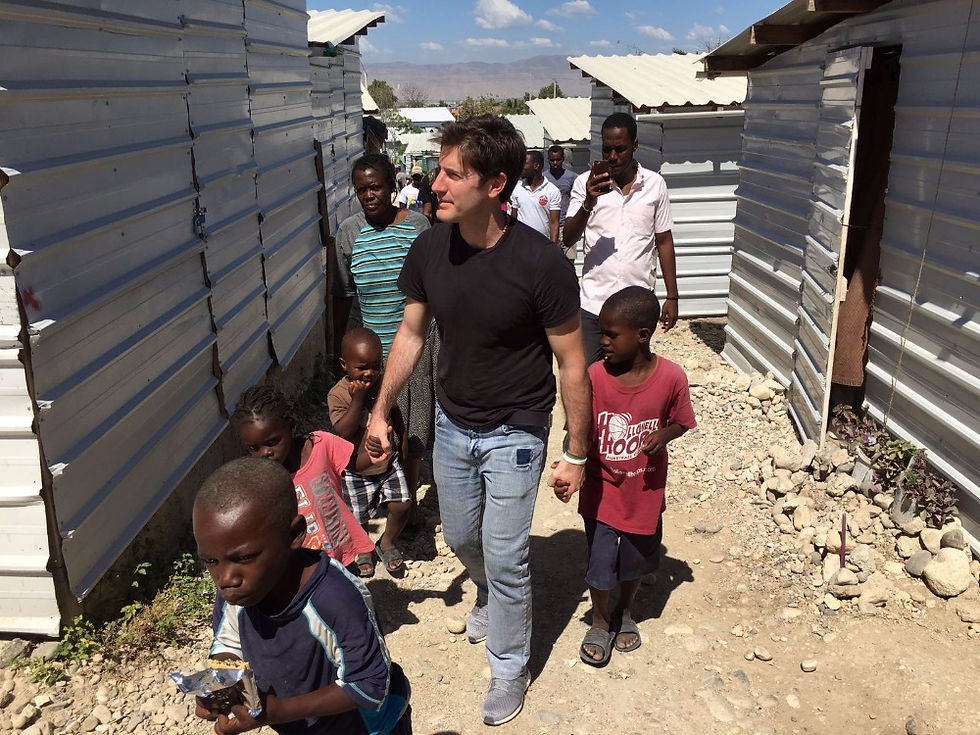
Imagine standing where eight-year-old Amara stands right now—on the edge of a makeshift camp, dirt under her small feet, uncertainty pressing in from every side. She clutches a tattered blanket that still smells faintly like home, her eyes wide with questions she's too young to ask: Will we be safe here? Will Mama stop crying? When can we go home?
In that moment, hope feels like the most fragile dream. Until something extraordinary happens. A simple fold unfolds before her eyes, and in just 11 minutes—with no tools, no complicated instructions—a real shelter takes shape. Suddenly, Amara has walls again. She has a door to close. She has dignity.
This is where Nicolás García Mayor's journey intersects with millions of stories like Amara's.
The Immigrant Who Dared to Dream Impossible
Once a rising star climbing the corporate ladder, Nicolás made a choice that left everyone around him questioning his sanity. He walked away from everything—the steady paychecks, the prestigious title, the comfortable predictability—to pursue something far more uncertain but infinitely more meaningful.
Picture him arriving in the United States: an immigrant with no network, stumbling through broken English, carrying nothing but a single prototype of emergency housing in his worn suitcase. Friends back home probably thought he'd lost his mind. But Nicolás carried something more powerful than doubt—he carried the faces of every displaced family he'd ever encountered, and the unshakeable belief that their dignity mattered.
He called his vision CMAX Foldable Mobile Housing, and that first shelter felt like witnessing a miracle unfold.
When Design Becomes Love in Action
Here's what makes your heart race about Nicolás's creation: shipped flat like furniture from IKEA, each unit snaps open into a wind-resistant sanctuary for up to ten people. No tools needed. No engineering degree required. In a world where disaster response often moves at the speed of bureaucracy, this shelter assembles in the time it takes to make coffee.
But the true genius lies deeper. The same shelter that protects little Amara's family in their darkest hour can stand for decades afterward—transforming into community centers, medical clinics, even vacation retreats. It's sustainable compassion engineering, an example of designing with empathy proving that thoughtful engineering can create long-term, meaningful impact which ripples far beyond the original crisis.
Think about that. Your purchase of a glamping unit for weekend getaways could directly fund shelter for a family fleeing war. Your company's event space rental could provide refuge for climate disaster survivors. This isn't charity—it's solidarity woven into the fabric of commerce.
The Numbers That Should Keep Us Awake
Here's the reality we can't ignore: 350 million people are displaced right now—that's the entire population of the United States wandering without permanent homes. But here's what should stop you in your tracks: in just ten years, that number explodes to 1.2 billion displaced souls. Climate change isn't coming—it's here, reshaping our world with floods, fires, and storms that respect no borders.
And here's the heart-wrenching detail that should haunt every parent reading this: 60% of displaced people are children. Sixty percent. These are the future doctors, teachers, artists, and innovators of our world, beginning their lives amid unimaginable trauma. What happens to humanity when its next generation starts with such profound wounds?
Key Stats to Remember:
350 million people are currently displaced
That number is expected to grow to 1.2 billion by 2034
60% of the displaced are children
The Question That Changes Everything
When most of us see disaster coverage, we unconsciously create distance. We say "those refugees" or "those poor people," as if displacement is something that happens to other kinds of humans. But Nicolás stops us right there with words that slice through our comfortable assumptions: "No, it's WE. We are refugees!" His point? In a crisis, anyone can become displaced. It doesn’t matter your job, background, or where you live—it could just as easily be you or more.
He forces us to confront an uncomfortable truth: displacement doesn't discriminate. The executive who lost everything in Paradise, California's wildfire. The professor who fled Ukraine with her children. The farmer whose land disappeared beneath rising seas. They weren't "other people" before disaster struck—they were us, living ordinary lives until extraordinary circumstances changed everything.
"We belong to each other," Nicolás reminds us, "therefore we have a responsibility for one another's well-being."
Your Part in This Story
This isn't just Nicolás's story—it's becoming ours. Every time you choose empathy over indifference, you're authoring the next chapter.
CMAX operates on a beautiful principle: for every ten units sold, one gets donated to humanitarian organizations. Your weekend glamping adventure literally shelters a displaced family. Your company's mobile office space funds refuge for climate migrants.
But the real invitation goes deeper. Maybe you're an architect who could design with displaced communities in mind. Maybe you're a teacher who could welcome refugee children with extra warmth. Maybe you're simply someone who could choose to see shared humanity instead of separate struggles.
You don’t need to be an architect or aid worker. You can donate, raise awareness, or even just share this story—every small action helps drive impact.
The Heaven We Create Together
"You don't have to wait for heaven," Nicolás says with the confidence of someone who's witnessed miracles unfold from folded metal and fabric. "It's here! We are here, welcome!"
He's right. Heaven isn't some distant promise—it's the moment when Amara's family finds safety in a shelter that someone designed with love. It's the instant when fear transforms into hope, when isolation becomes community, when "them" becomes "us."
This is a story of waking up to our hearts, our technologies, and our responsibilities. It's about embracing uncertainty, stepping beyond comfort, and choosing to become the love we seek in the world.
Share This Forward
If this story stirred something in you, don't let that feeling fade. Share it with friends who believe design can do good. Send it to colleagues who might see their own skills differently. Forward it to anyone who's ever wondered how to make a meaningful difference.
Because when we unite—using our talents, our technologies, and our tenacity to uplift those in need—we're not just building shelters. We're crafting the blueprint for a more compassionate world.
And that blueprint starts with each of us choosing to see every displaced person not as a statistic, but as someone's Amara, deserving of dignity, safety, and hope. Let’s help make something that folds open too—one shelter, one story, one shared act of compassion at a time.
That is Nicolás García Mayor's most enduring legacy. And now, it can be part of yours too.
🎧 Inspired? You can listen to the full conversation with Nico on the Productive Passions Podcast here.
Want to follow Nicolás’s journey? Connect with him on LinkedIn.


.png)
Comments